
What happens when the very thing that could help you feel better is the thing you are most afraid of?
For many people over 60, that thing is exercise. Not because they are lazy or unmotivated — but because their body has given them enough reasons to be afraid. An injury that took months to recover from. A movement that triggered pain for days. A doctor who said, plainly, "don't do that."
Over time, those experiences add up. And the safest-feeling choice becomes stillness.
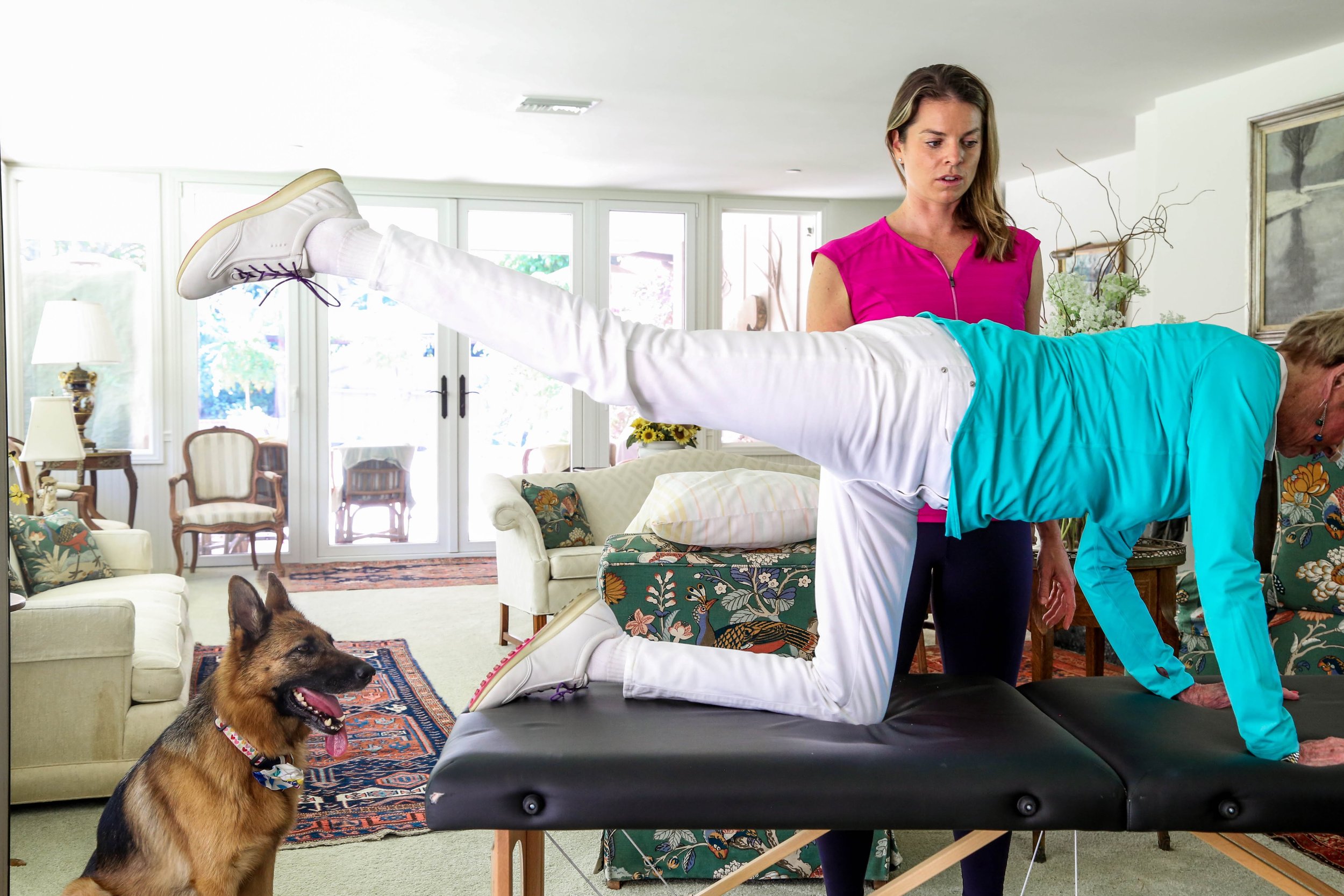
I want to tell you about a patient I will call Margaret.
Her History Makes the Fear Make Sense
Margaret is 68, recently retired, and she came to see me not because she wanted a big fitness overhaul. She came because she wanted to stop being afraid to move her body.
Her relationship with her body has been complicated for decades. A motor vehicle accident in her 20s affected her cervical spine from C2 to C7. Those vertebrae have continued to degenerate, and she has lived with chronic neck pain and migraines ever for a long time. Carrying groceries can still trigger a migraine that wipes out her entire day.
In the last year, she was also diagnosed with osteoarthritis in both knees and Baker's cysts. She has osteoporosis. She has been told clearly not to lift anything overhead. She can no longer do yoga.
Every time she tried to exercise, something went wrong. So she stopped trying.
This is called fear-avoidance and it is one of the most common barriers to healthy aging I see in my practice. The fear is not irrational. It is learned. And it can be unlearned.
What We Did on Day One
On Margaret's first visit, we did not push limits. We built a foundation.
Her prescription had three goals: open the body gently, train healthy posture without threatening the neck, and begin rebuilding strength in a way she could actually do at home the next morning.
Floor
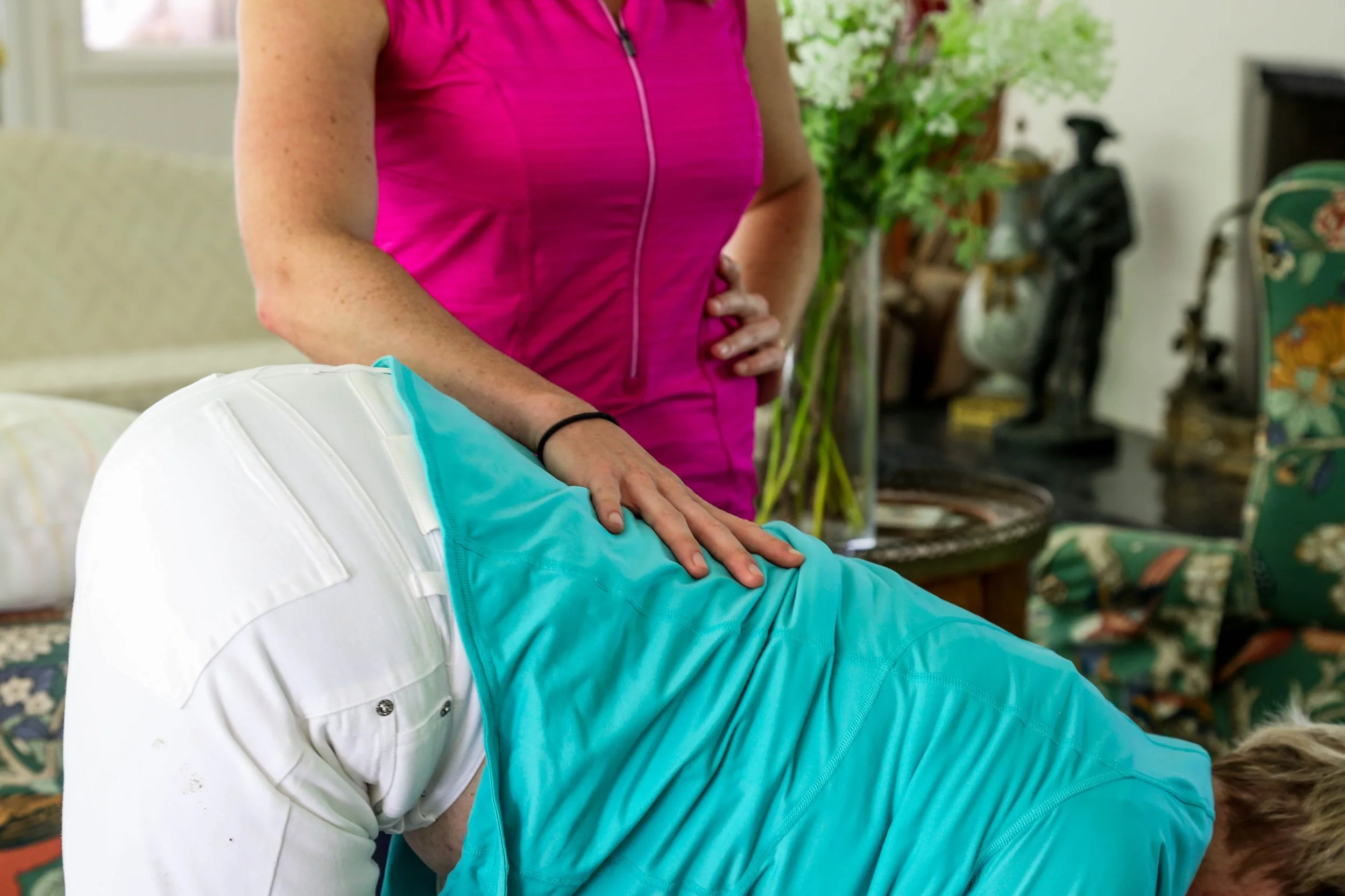
Chest opener with breathing over a lengthwise pillow
Overhead arm reach with straight arms
Open Books for upper back rotation
Gentle chest lift on elbows (Sphinx)
Side-lying quad stretch
Seated in a Chair
Figure-4 hip stretch
Seated cat/cow spinal wave
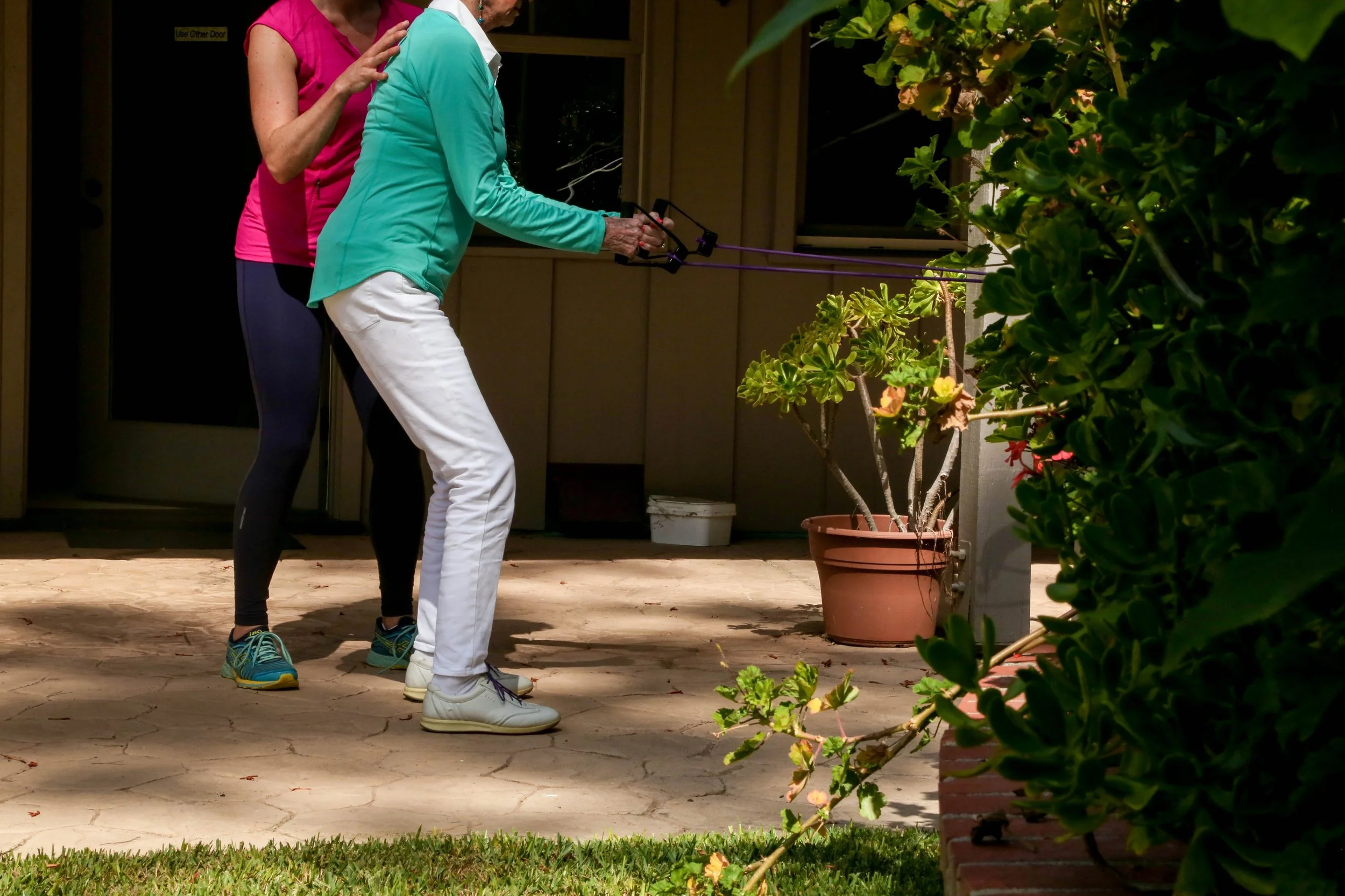
Strength with a Resistance Band
Standing bilateral external rotation, elbows at sides
Staggered-stance bicep curls
You might look at that list and think: that seems so small.
It is intentionally small. Margaret has years of fear stored in her nervous system. The job on day one is to give her movements she can do tomorrow and feel good afterward. That feeling — waking up the next morning and thinking I'm okay, actually — is what starts to rebuild trust between a person and their own body.
Why This Is Not "Just Stretching"
Every exercise in Margaret's prescription is doing specific, purposeful work that reflects real physiology.
The chest opener and overhead arm reach address the forward posture that accumulates from years of guarding an injured neck — pulling the shoulders back and gently lengthening the muscles that have shortened from chronic tension. The Open Books give her upper spine rotation it has not had access to in years. The resistance band work targets the posterior shoulder and scapular muscles that support her cervical spine and protect her knees during daily loading.
This is not exercise for the sake of exercise. It is targeted mobility work: the same framework I teach in my workshop series, Learning to Stretch for Longevity.
Mobility work is not just about touching your toes. It is about preserving the confidence and range of motion you need to carry groceries, get off the floor, walk the dog, and live your life freely as you get older.
And it is about telling your nervous system that movement is safe again.
The Difference Between Mobility and Stretching (And Why You Need Both)
One of the most important things I cover in my workshop is this distinction. People use the words interchangeably, but they are not the same thing:
Stretching focuses on muscle length — lengthening a muscle passively or actively, held for 20 to 60 seconds, working on the muscle-tendon unit. Think: hip flexor stretch, calf stretch, quad stretch.
Mobility focuses on joint range of motion — active control through a full range, involving muscles, joints, fascia, and the nervous system. Think: hip circles, shoulder rotations, spinal waves.
Stretching builds the foundation. Mobility puts it to use. For aging adults especially, you need both.
And the good news? The American College of Sports Medicine says 10 to 15 minutes a day, two to three times per week, captures most of the benefit. Consistency matters more than duration. You do not need an hour. You need a habit.
If Margaret's Story Sounds Like Yours
Maybe you have your own list of things you have been warned not to do. Maybe pain or injury has made movement feel risky, and that wariness has quietly grown over the years into something that keeps you on the couch more than you want to admit.
Maybe you have time now — retirement, an empty nest, a shift in priorities — and you want to invest in your health, but you do not know what is actually safe for your specific body.
That is exactly where I work.
Not extreme fitness. Not boot camps or high-intensity classes built for 30-year-olds. The space between sedentary and strong — where real, lasting change happens for people who have a history, a complicated body, and a genuine desire to feel better.
Gentle is not the same as useless. Starting where you are is not giving up. It is the only place anything real can begin.
I work with adults in person in Portsmouth, Rye and New Castle New Hampshire, and virtually anywhere in the world. Whether you want a one-on-one program built around your specific history, or you are looking for an ongoing community of people doing this work together, there is a place for you here.
Ready to Start Moving Again?
Let's talk about what a personalized plan could look like for you.