
Ask a PT: Heavy Lifting After 50
If you're over 50, you've probably noticed the advice everywhere: lift heavy for longevity. As a Doctor of Physical Therapy, three questions about that advice come up constantly in my practice. Here's what the research says, and what I actually tell the people asking.
Is Heavy Lifting Actually Safe? Or Am I Risking a Fracture?
For most adults over 50, heavy lifting isn't the risk. Not lifting is.
Bone responds to load. Light weights don't send a strong enough signal to build it back. Heavier ones do.
In the LIFTMOR trial, postmenopausal women with low bone density lifted heavy, twice a week, for eight months. As a result, spine bone density went up. The group doing light resistance and stretching lost bone density in the same time period. Nobody in the heavy lifting group got hurt.
This study looked at women, but the underlying principle, bone strengthens under load, holds for men too. If you're not sure where your bone density actually stands or when to get a baseline test, here's a clear overview of current screening guidelines for both men and women from the National Osteoporosis Foundation.
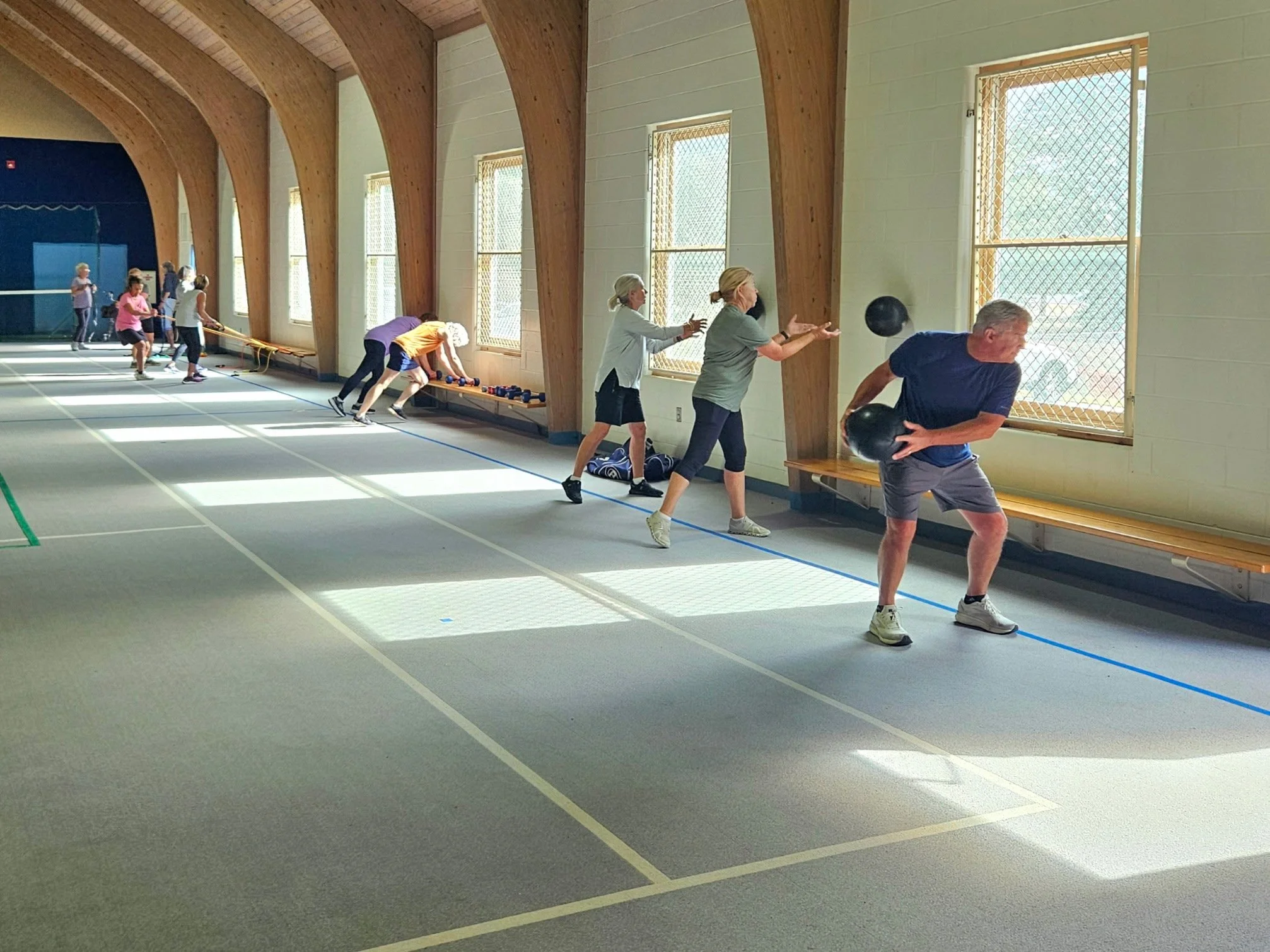
In my work as a DPT, over the course of 3 months I've helped many sedentary adults over 50 go from not being able to touch their toes and get up from a chair without back stiffness, to lifting over 40 pounds from the floor without stiffness or pain.
I recently had a participant in my weekly Strength and Conditioning class for older adults in New Castle, NH tell me that her recent bone mineral density test results showed a 15% increase after implementing a year of strength training 2 to 3 times a week.
Here's the safe solution: start light and build the movement pattern. The heavy part comes later, on a body that already knows how to move.
I Already Have Joint Pain. Will Heavy Weights Make It Worse?
Not if we build the foundation first.
Strong muscles support and stabilize a joint. Weak ones let it absorb more force than it should. A randomized controlled trial on women over 40 with knee osteoarthritis found that high-intensity resistance training didn't damage the joint, it slowed cartilage degeneration. Source: Resistive Exercise for Arthritic Cartilage Health (REACH) trial
But that result came from training that was progressive and well-built, not from someone in pain grabbing a heavy dumbbell on day one.
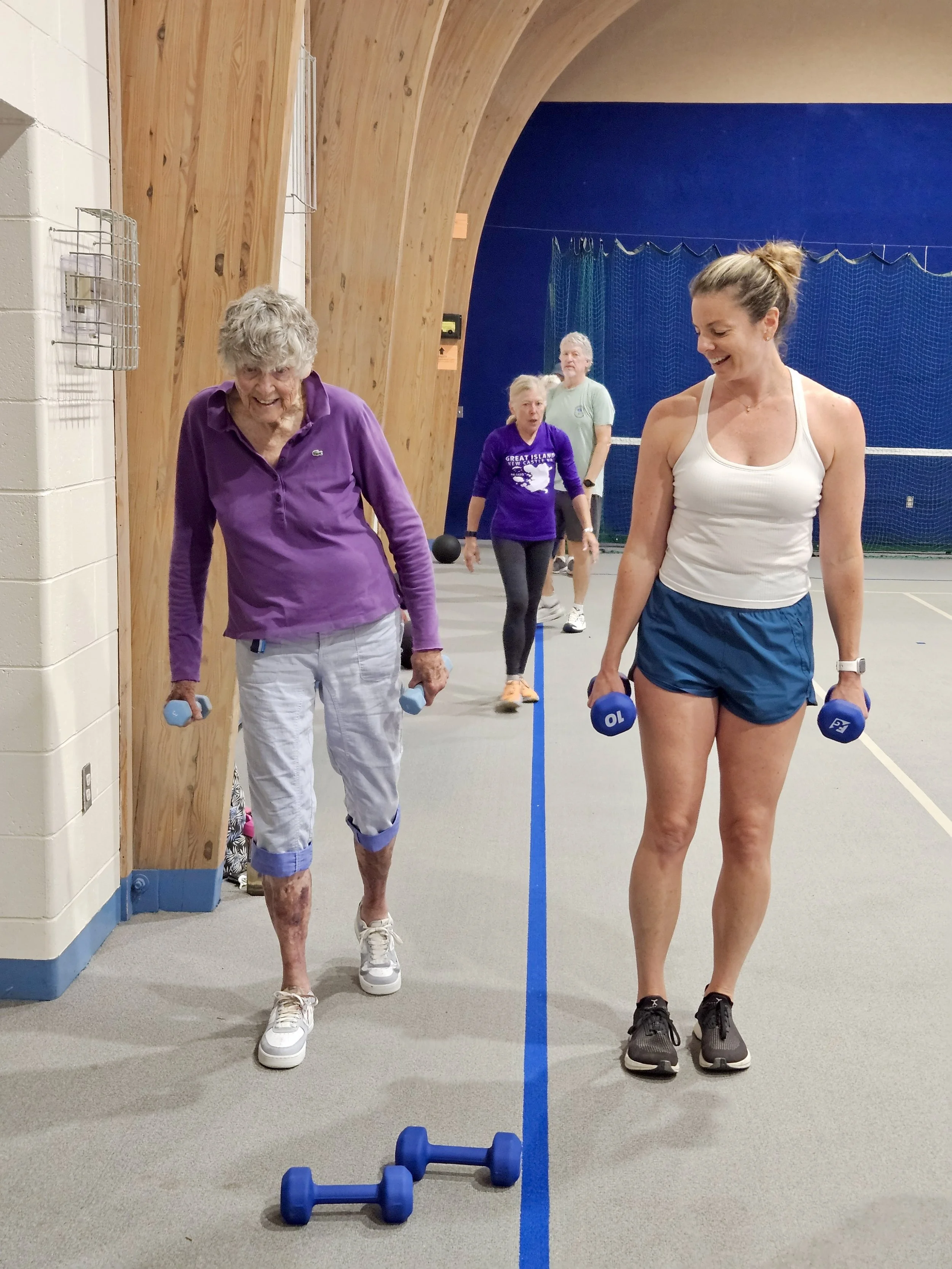
That's why mobility and core activation come before load, not after it. A joint needs to move well before it can handle weight well. Your core needs to know how to stabilize your spine before your spine is asked to support something heavy overhead. Skip that step, and the joint takes on work it isn't ready for. Build it first, and heavy lifting becomes something your joints are supported through, not strained by.
When I work with a patient less than a week post total knee replacement, I'm not specifically loading that joint heavy first. I'm building up the muscles and movement patterns around it. The same applies to joint pain, we can build around the joint and lift heavy in a way that won't compromise it.
Ankle Mobility is a prerequisite for squatting and stairs. An ankle joint that moves well helps the knee joint on top of it take and produce load.
What Actually Counts as "Heavy" for Someone My Age?

Heavy is relative. It's not a number on the plate, it's a percentage of what you can currently lift.
A meta-analysis of 25 randomized controlled trials in adults 65 and older found that training at 70 to 79% of a person's one-rep max produced the largest strength gains, more than lighter loads did. Source: NSCA Resistance Training for Older Adults Position Statement
That means "heavy" for you might be 15 pounds this month and 35 pounds next year. Both can be the right kind of heavy, at the right time, for that body.
Think about the last time you moved a piece of furniture, hauled a bag of soil, or lifted a packed suitcase into the car. That was probably 30 to 40 pounds. You already handle that kind of load in daily life. Training with it on purpose just makes you better prepared for it.
I ask my clients and patients what types of loads they lift for their usual everyday activity, and that gives me an idea of the weights they're already using. I assess the quality of their movement, ask what weight they're comfortable with, and see how they move holding that weight. I check their RPE, Rate of Perceived Exertion, during one set with that weight, then set the load accordingly for up to three full sets.
The number matters less than the percentage. Heavy is wherever your current strength meets real effort, creating "good stress."
Ready to Build Your Foundation?
Mobility. Core activation. Movement patterns. A body that knows how to move well before it's asked to move heavy. That's exactly what The Balanced Movement Foundation is built around: a 12-week virtual community for active adults ready to build the movement foundation for lifelong strength and sustainability, with the education, support, and connection to make it stick.
Join the waitlist for the next Balanced Movement Foundation collective.